Installing Barn Doors on Drywall vs. Studs
Jun 26th 2026
The most common installation question is not about which hardware to buy. It is about what is behind your wall. Barn doors are heavier than standard interior doors, and they carry a dynamic load every time they slide. Understanding what your wall can support, and how to work with it, is where a successful installation begins.
Why the Mounting Surface Matters
A barn door track is not just holding the weight of the door. It is absorbing lateral force every time the door moves. Most interior barn doors weigh between 60 and 100 pounds, and solid wood or glass-panel options can weigh considerably more. Drywall alone cannot handle this kind of sustained load. Screws set into drywall will work loose over time, and when they fail, they fail without warning.
The goal is always to get lag bolts into solid wood, either directly into wall studs or through a header board that itself is anchored to studs.
Locating Your Studs
Before anything else, run a stud finder along the wall above your door opening and mark every stud location. In most residential construction, studs are spaced 16 inches on center, though 24-inch spacing is common in some builds. Gray House Studio's barn door installation guide recommends marking stud centers with painter's tape above the door opening before you measure for track placement, so you can plan your mounting approach around what is actually in the wall.
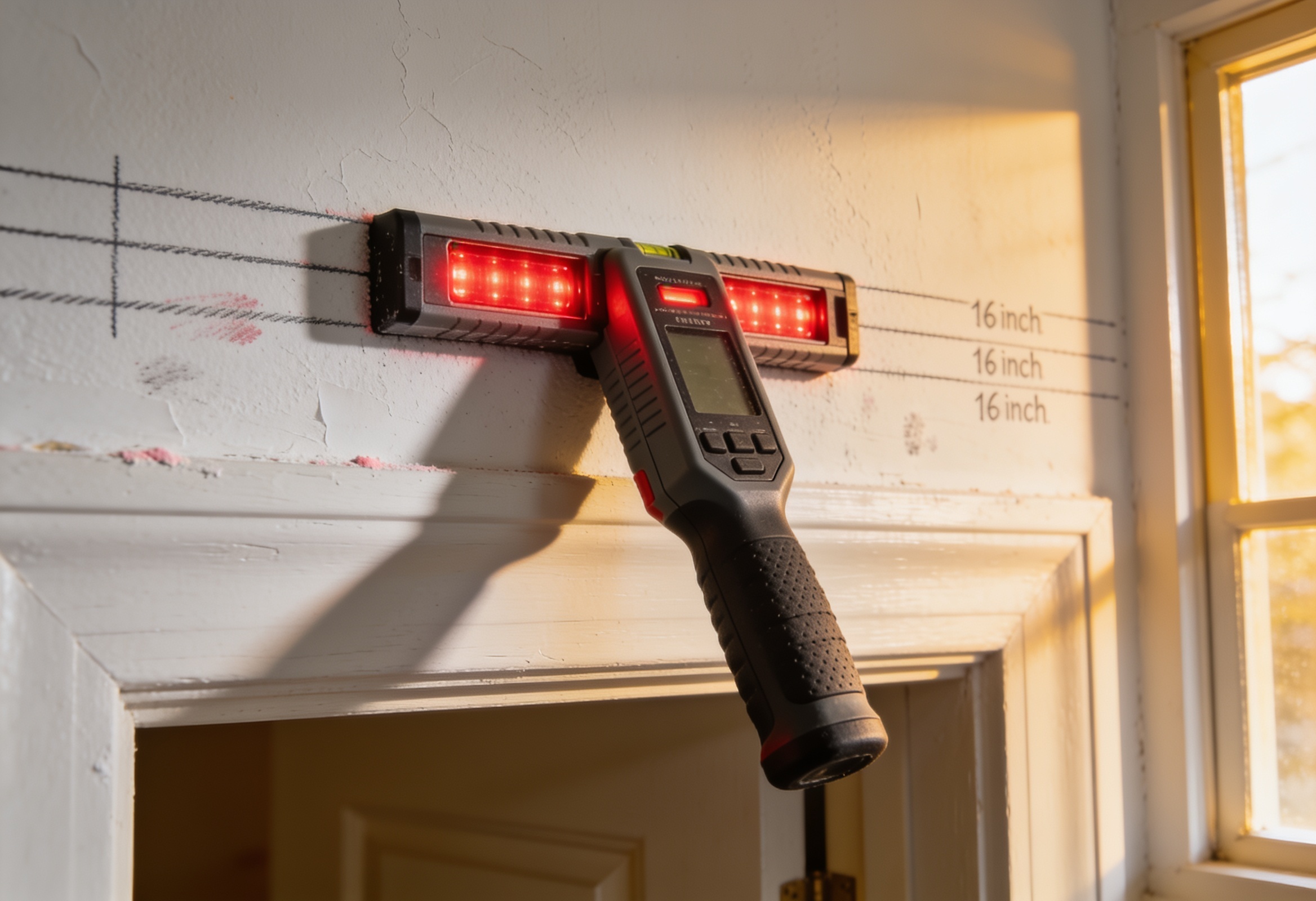
If studs fall where your track mounting holes land, you can proceed with a direct installation. If they do not, which is common, a header board is the right solution.
Mounting Directly to Studs
Direct stud mounting is the strongest option. Lag bolts driven into stud centers create a connection that holds both the static weight of the door and the movement load indefinitely. For most standard doors, a minimum of two stud connections is required, and three or more is recommended for heavier doors.
The limitation is that track mounting holes are spaced to accommodate a range of door widths, and those holes do not always align with studs. When they do not, forcing the installation is not the answer.
When to Use a Header Board
A header board is a horizontal piece of lumber installed across the wall above the door opening, anchored directly into the studs. Once the header is in place, you mount the track to the header, giving every track bolt solid wood to bite into regardless of where the studs fall.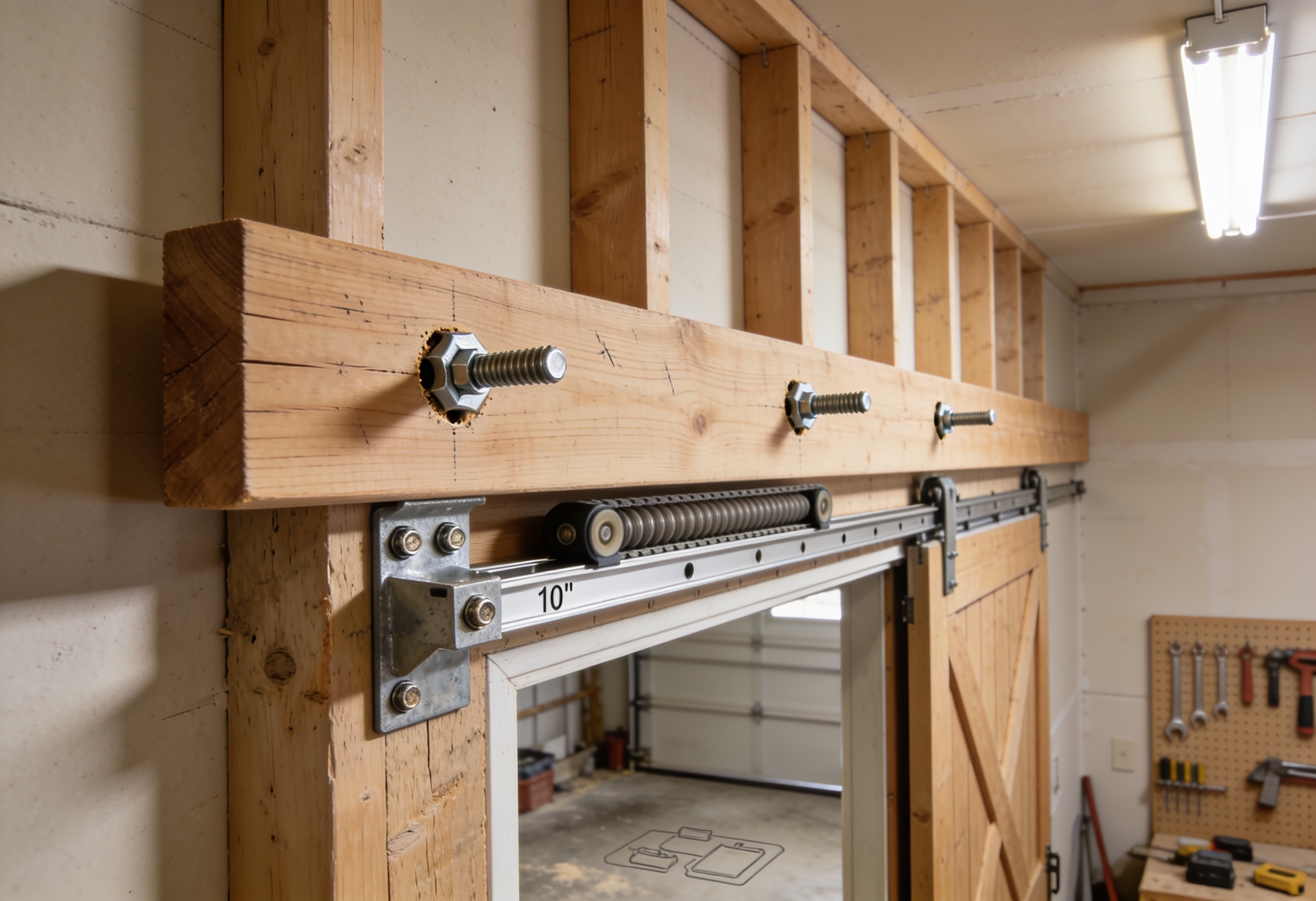
The Barn Door Hardware Store's header board installation guide recommends using 1×6 or 1×8 dimensional hardwood — oak, maple, or poplar are reliable choices. The board should span the full length of the track and extend beyond it on each side, attaching to at least two studs. Avoid pine, MDF, or particleboard. None of them hold lag bolts reliably under dynamic load.
? For a visual overview of barn door hardware installation and common mounting questions, this walkthrough is a useful reference:
The header board also solves an aesthetic problem. It gives you a finished backing surface above the door, which can be stained or painted to match the door, the wall, or the hardware. Many homeowners choose to leave it visible as a design element rather than hiding it behind paint.
Can You Mount to Drywall Without Studs?
In limited situations, concrete walls, metal-stud framing, or older construction where studs are difficult to locate, heavy-duty toggle bolts rated for the combined weight of the door and hardware can provide an alternative. Viba Hardware's structural support guide for barn doors notes that toggle bolts are not ideal for most barn door installations, but when installed correctly and rated for the load, they are a workable solution in walls where direct stud mounting is not possible.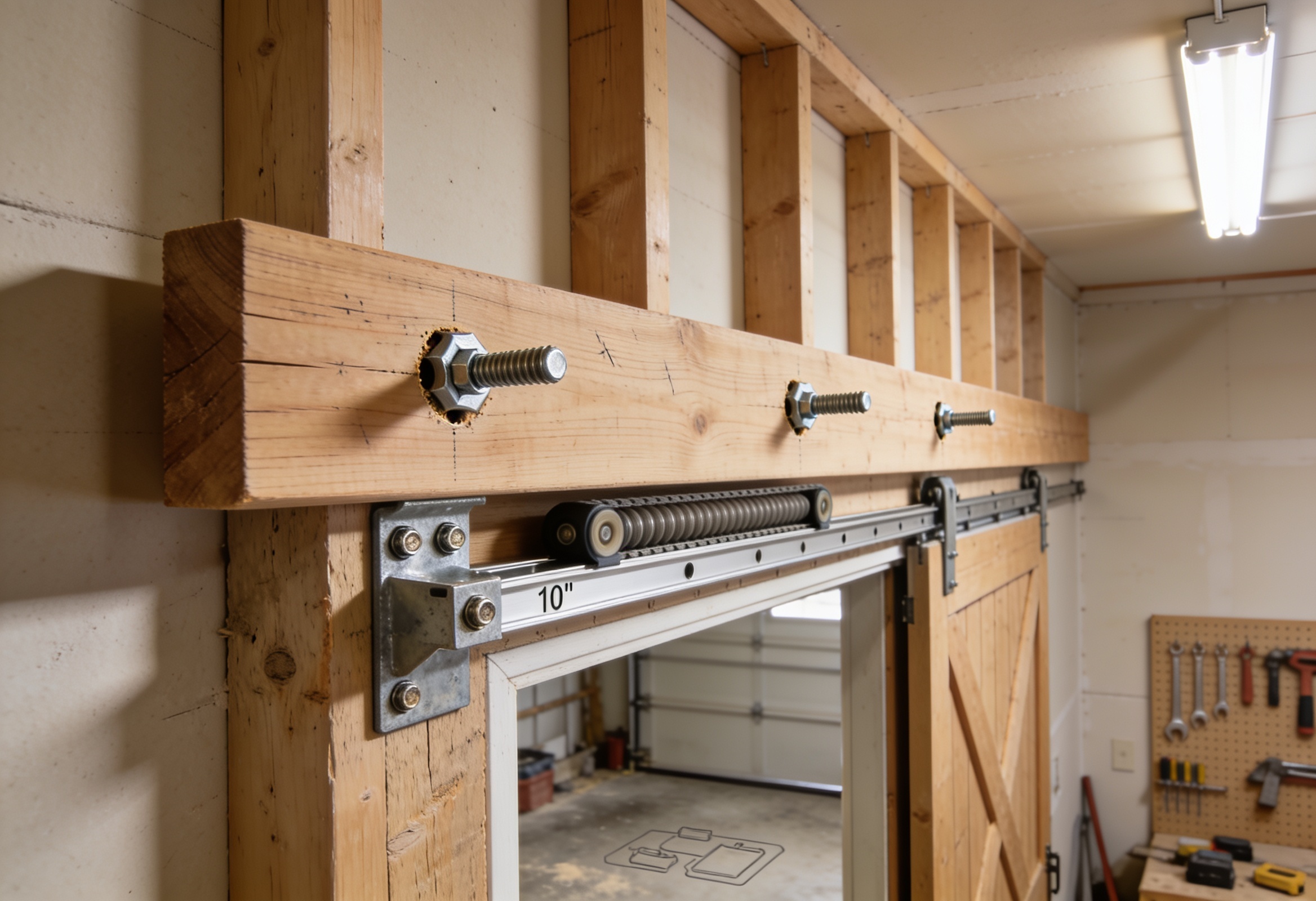
Always verify the weight rating on any anchor against the actual weight of your door plus hardware before proceeding.
Checklist Before You Start
Know the weight of your door and confirm your hardware is rated to support it. Locate your studs before measuring track placement. If studs and track holes do not align, plan for a header board. Use lag bolts for studs, not wood screws. And always check that the track will be installed level, an unlevel track causes the door to drift and creates long-term stress on the hardware.
One detail homeowners often overlook: the header board must extend far enough on each side to reach the studs beyond the door opening, not just span the opening width. A board that ends before it hits a stud has nothing solid anchoring it. Measure twice before you cut.
BarnDoorz includes installation guidance with every hardware kit, covering mounting requirements based on door weight and wall construction so you have the right information before your first drill hole.

