Barn Door Sticking or Scraping? A Troubleshooting Guide
Jul 29th 2026
A barn door that used to slide smoothly but now drags, catches, or makes a grinding noise is not necessarily a serious problem. Most causes come down to one of a handful of issues, and the majority can be resolved without replacing any parts. This guide walks through how to diagnose and fix the most common movement problems.
Start With the Track
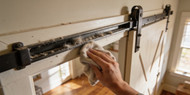
The track is the first place to check. Dust, pet hair, and fine debris accumulate in the channel and create friction against the rollers over time. Wipe the track thoroughly with a dry cloth, and use a vacuum with a brush attachment to clear the channel before anything else.
Avoid WD-40 on barn door tracks. It displaces moisture effectively but leaves behind an oily residue that attracts more debris and accelerates buildup. A dry silicone lubricant is a better choice, apply it lightly to the rollers rather than the track surface.
Once the track is clean, inspect it visually for bends or warping. A track that has been knocked or pulled at an angle will not roll smoothly regardless of how clean it is. A damaged track needs to be replaced, not adjusted.
Check the Rollers
Rollers that are dirty or worn will scrape against the track and create resistance. While the door is hanging, examine each roller for debris packed around the wheel. A soft brush or cloth removes most buildup. For stubborn grime, warm soapy water and a toothbrush work well.
The Barn Door Hardware Store's barn door troubleshooting guide points out that roller bearings in lower-quality hardware can also wear flat over time, especially on heavy doors used multiple times daily. A flat-spotted roller will cause a rhythmic thudding or scraping. If the roller spins unevenly or catches at the same point in every rotation, replacement is the right fix.
Adjust the Door Height
If the bottom edge of the door is scraping the floor or dragging against trim, the door is hanging too low. Most barn door hangers include an adjustment bolt that raises or lowers the door without removing it from the track.
Place a level on the face of the door to identify whether one side is lower than the other. Adjust the hanger on the low side in small increments, a quarter turn at a time, and test the door movement after each adjustment. Lowe's guide to fixing a barn door notes that small adjustments have a noticeable effect, so incremental changes are better than large corrections.
This step-by-step video covers roller adjustment and common barn door hardware fixes in detail:
Check the Floor Guide
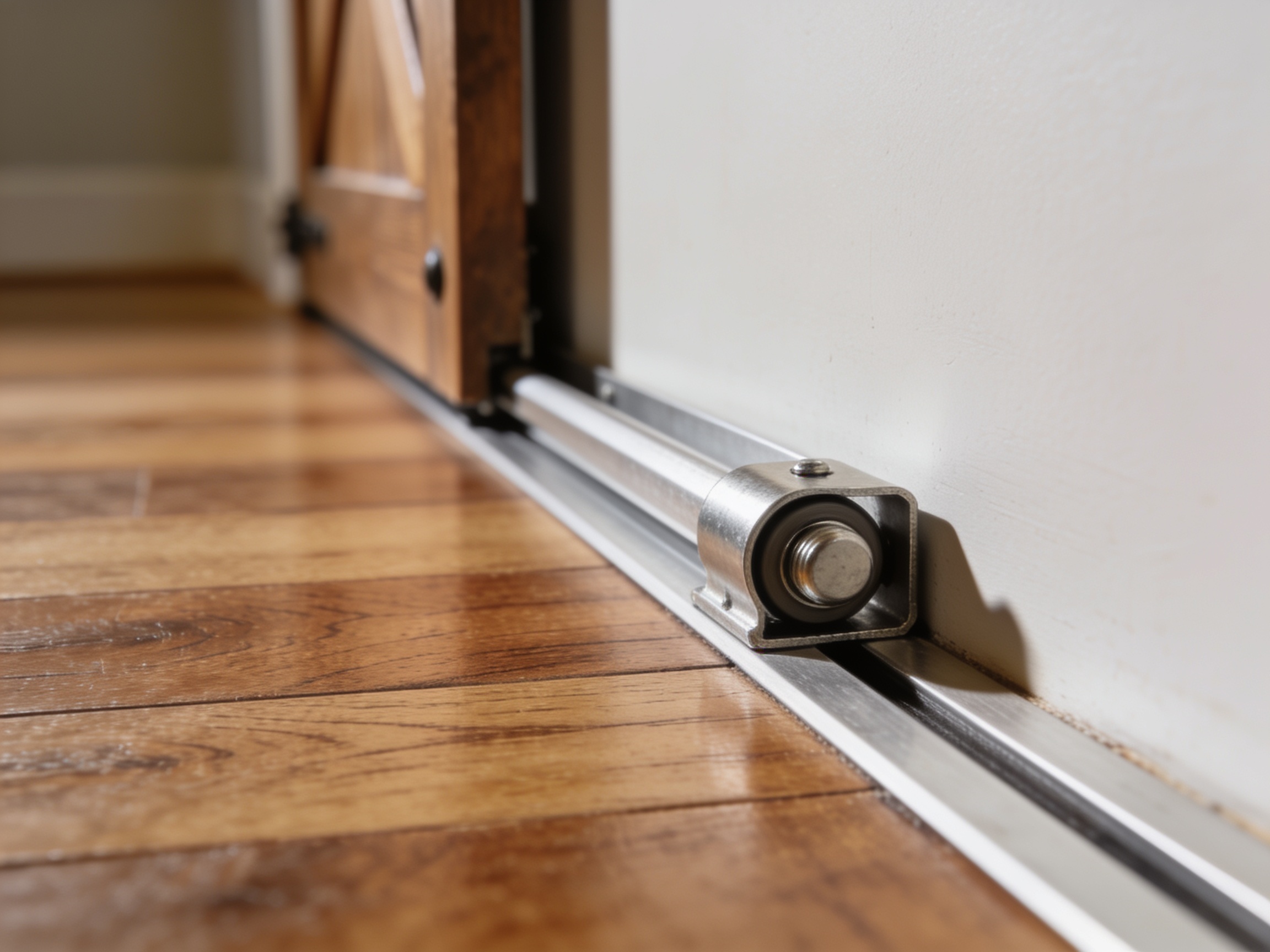
A barn door that scrapes the wall or swings out at the bottom has a floor guide problem, not a track problem. The floor guide keeps the bottom of the door running parallel to the wall as it slides. Without it, or with one that has shifted, the bottom of the door will catch against the wall, baseboard, or trim.
Reposition the floor guide so it holds the door close to the wall without gripping it. There should be enough clearance for the door to move freely, with the guide providing direction rather than friction. If the guide is missing entirely, add one, this small component prevents most bottom-scraping issues from happening in the first place.
Is the Track Level?
An unlevel track is one of the more overlooked causes of a sticky or slow-moving door. Even a slight pitch along the length of the track will cause the door to drift toward one end or resist movement in the other direction. Place a long level on top of the track along its full length, a short level will not catch a gradual slope.
If the track is out of level, it will need to be shimmed or remounted. This is less common in newer installations but worth checking if the door has always moved unevenly since installation.
When the Problem Is the Door Itself
A door that has warped or swelled due to humidity changes will not roll smoothly regardless of how well the hardware is adjusted. Check whether the face of the door is flat by sighting down it from one end. A bow or twist in the door panel transfers stress directly to the track and rollers.
Solid wood doors are more susceptible to moisture movement than MDF or composite options. In high-humidity spaces like bathrooms or laundry rooms, this is worth factoring into material selection. A door that has developed a significant warp is generally better replaced than corrected.
BarnDoorz barn doors are designed for daily use, and our support team can help diagnose movement issues specific to any hardware in our lineup.