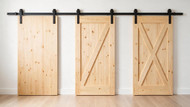
The Z-Bar, X-Bar, and Flat Panel: Barn Door Design Styles Explained
Sep 3rd 2026
When most people picture a barn door, they picture a specific silhouette: horizontal planks held together by diagonal bracing in a Z or X pattern. That image is accurate for traditional barn construction, but modern residential barn doors have expanded well beyond it. Understanding what separates the main design styles makes it easier to choose a door that belongs in the room rather than one that just fits the opening.
The Flat Panel: Clean and Versatile
A flat panel barn door has no applied bracing, rails, or decorative elements. The door face is a smooth, unbroken surface, typically MDF, solid wood, or a wood-veneer composite.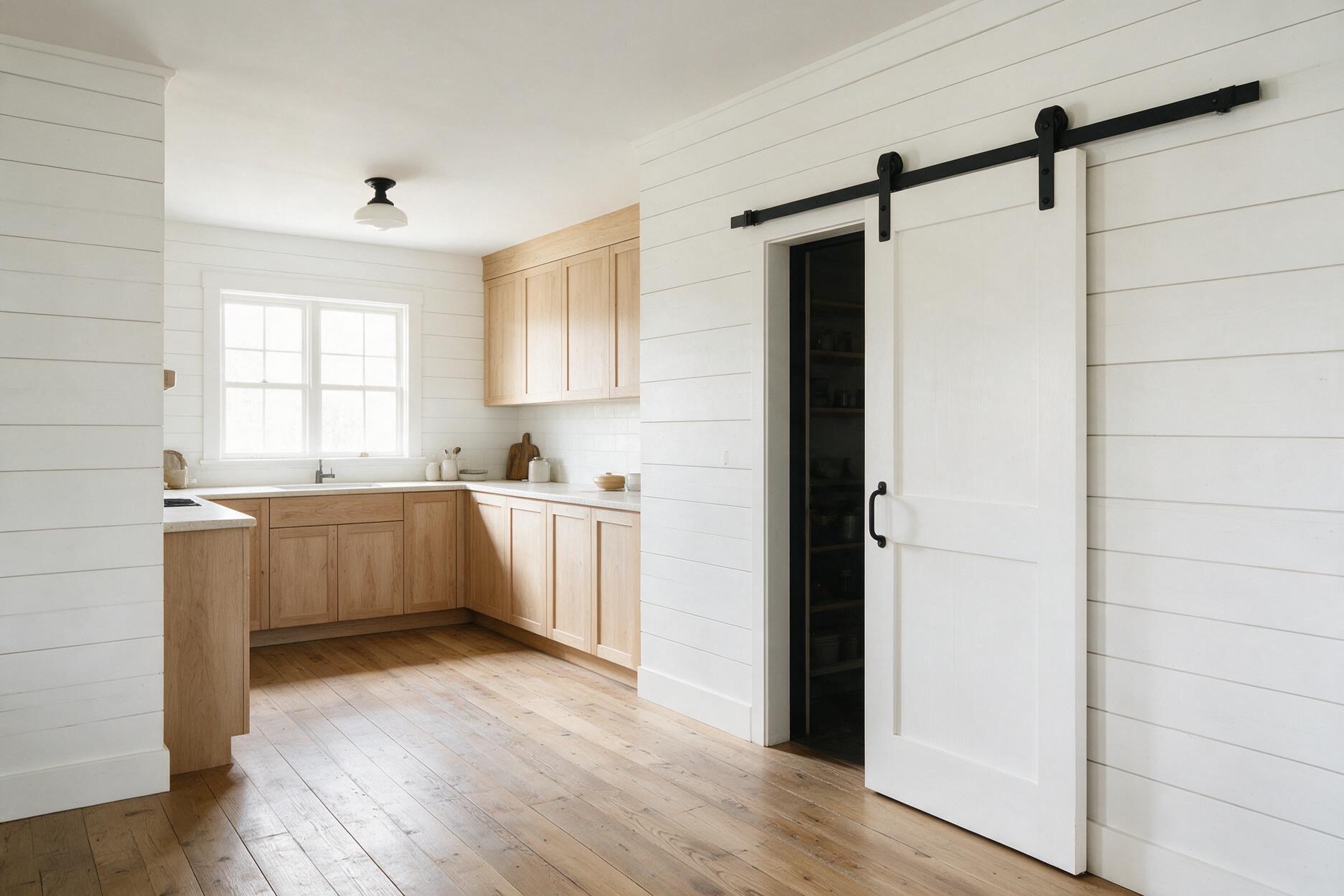
This is the style that works across the widest range of interior aesthetics. In a modern or contemporary home, a flat panel barn door disappears into the architecture and reads as a wall until it moves. In a transitional space, it can be stained or painted to match existing millwork. In a farmhouse interior, a white painted flat panel is a clean counterpoint to more textural elements like shiplap or open shelving.
The flat panel is also the best choice when the hardware is meant to be the design statement. Because the door face is neutral, an architectural track system or a distinctive handle can carry the visual weight without competing with the door's own geometry.
The Barn Door Hardware Store's guide to barn door styles notes that flat panel doors have overtaken braced styles in residential applications over the past several years, driven largely by the growth of modern farmhouse and minimalist interiors where surface ornamentation is kept to a minimum.
The Z-Bar: The Original Working Door
The Z-brace pattern uses two horizontal rails connected by a single diagonal brace running from the bottom hinge-side corner to the top latch-side corner. It is the oldest barn door design still in use. The Z was not decorative in origin. It was structural, preventing a simple plank door from racking over time by triangulating the frame.
In a residential context, the Z-bar reads as rustic, handcrafted, and casual. It works well in farmhouse, country, and transitional interiors where the door is meant to feel like a reference to working architecture rather than a piece of furniture. Paired with a natural or weathered wood finish, a Z-bar door has a warmth and character that a flat panel does not replicate.
It is a subtler choice than the X-brace. The diagonal moves in one direction only, which gives the door a sense of direction rather than symmetry. This can be used deliberately: a Z-bar door with the diagonal running upward toward the latch side draws the eye toward the handle and feels more restrained than an X.
Lowe's barn door buying guide recommends Z-brace styles for spaces that already have rustic or traditional elements like exposed beams, reclaimed wood floors, or brick, where the door's agricultural references feel at home.
The X-Bar: Bold and Symmetrical
The X-brace adds a second diagonal to the Z, creating crossed braces that run from both bottom corners to both top corners. The result is a more symmetrical, visually heavier door that reads as rustic-industrial rather than agricultural.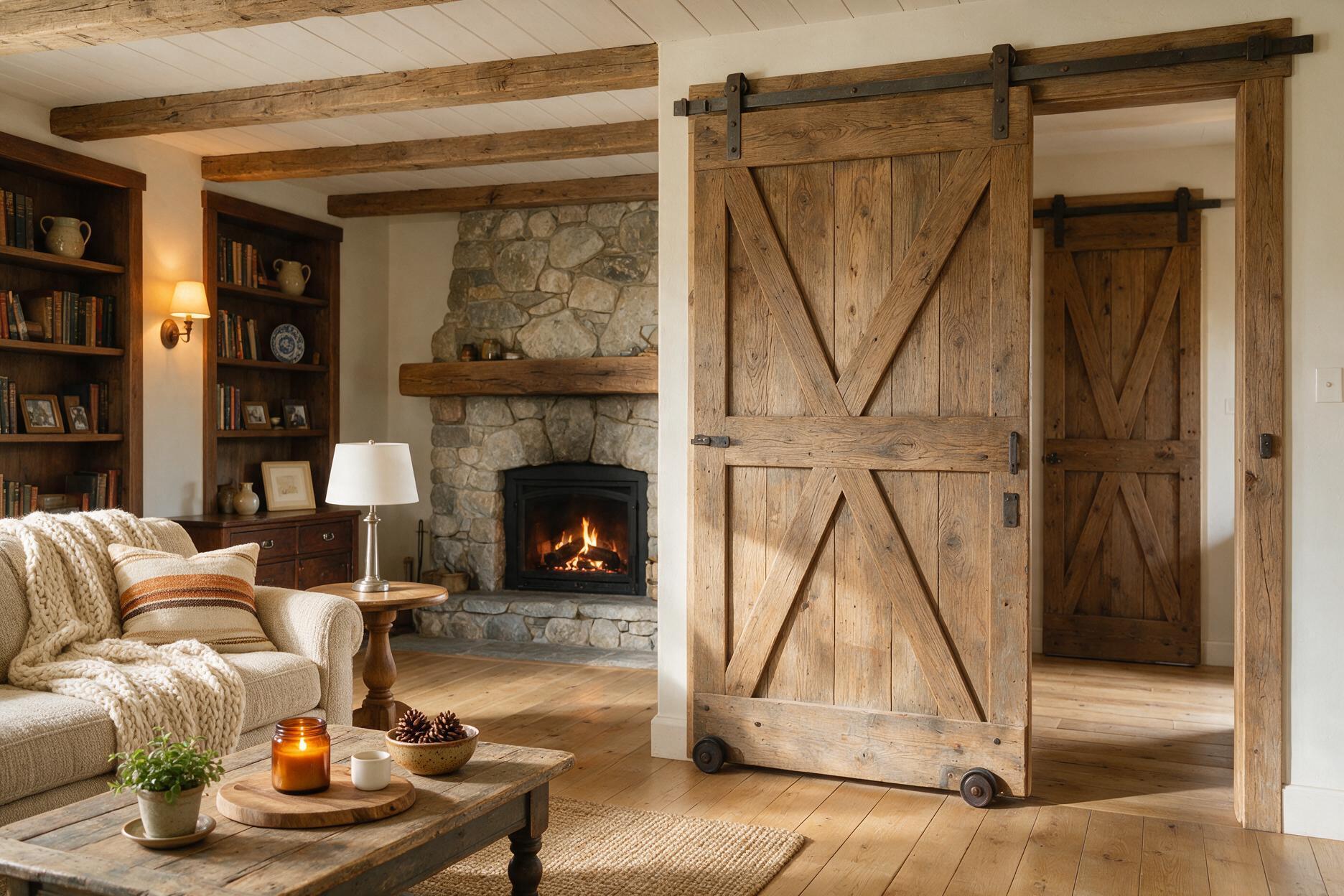
X-bar doors work in spaces where the architecture has a strong, deliberate character: a converted loft, an industrial-modern interior, or a home with exposed structural elements. The crossed brace has more visual weight than a Z, which means it can hold its own against bold colors, large-format tile, and dark flooring that would swallow a more understated door.
RealCraft's breakdown of the three main barn door types notes that X-brace doors are often used in pairs on bypass systems or double-door configurations, where the symmetry of the brace pattern mirrors across both panels.
Plank Doors: The Most Literal Interpretation
A plank door uses horizontal boards edge-glued or connected by a backing, with no brace visible from the front. It is the most literal nod to agricultural barn construction. Where a Z or X brace is decorative in residential use, a plank door feels even more tactile and raw, which is the point.
Natural wood grain, visible seams between boards, and a hand-applied or wire-brushed finish all amplify the effect. Plank doors are best suited to spaces where the rustic reference is intentional and the surrounding interior can absorb the visual texture: kitchens with open shelving, bedrooms with reclaimed wood headboards, or cabins and vacation homes where the honesty of the material fits the setting.
Glass Panel Variants
Any of the above silhouettes can be combined with glass panel inserts (lites, full-length glass, or frosted sections) that introduce light into adjacent spaces. A flat panel door with a single full-length frosted lite reads as modern. A Z-bar door with a row of divided lites across the top reads as craftsman or farmhouse. The glass variant extends the utility of the door style into spaces where light transmission matters: home offices, laundry rooms, or spaces divided from a naturally lit room.
Matching Style to the Space
The question to start with is not which style you like in the abstract. It is which style belongs in the room it will live in. A flat panel belongs in a contemporary or transitional space. A Z-bar belongs in a farmhouse or relaxed traditional interior. An X-bar belongs in a bold, industrial, or statement-driven room. A plank door belongs where authenticity is the point.
BarnDoorz offers all of these styles across a range of sizes and finishes, so the right door for the room is a matter of matching, not compromising.